Sarfaraz Khan has played six Tests for India, scoring 371 runs at 37.10 with one hundred and three fifties, all of them in India between February and November 2024. He was recalled on 9 August 2026 to replace the injured Sai Sudharsan for the two-Test tour of Sri Lanka.
Key takeaways
- Sarfaraz Khan has 371 Test runs at 37.10 from six matches and eleven innings, with one hundred, three fifties and three ducks.
- All six of his Tests were played in India; if he plays at Galle it will be his first Test outside the country.
- He last played a Test on 1 November 2024, making the Sri Lanka series a return after twenty-one months.
- His January 2026 form included the fastest List A fifty by an Indian (15 balls) and a 227 against Hyderabad that took him past 5,000 first-class runs.
- He replaces Sai Sudharsan, ruled out on 9 August 2026 with a right toe stress reaction, in a squad already missing Jasprit Bumrah.
Why has Sarfaraz Khan been recalled?
India confirmed on 9 August 2026 that Sai Sudharsan had been ruled out of the two-Test tour of Sri Lanka with a right toe stress reaction, and that Sarfaraz Khan would take his place. The BCCI said Sudharsan had been rehabilitating at the Centre of Excellence in Bengaluru and had made significant progress, but not enough to travel. Sarfaraz links up with the squad in Colombo before the team moves down to Galle.
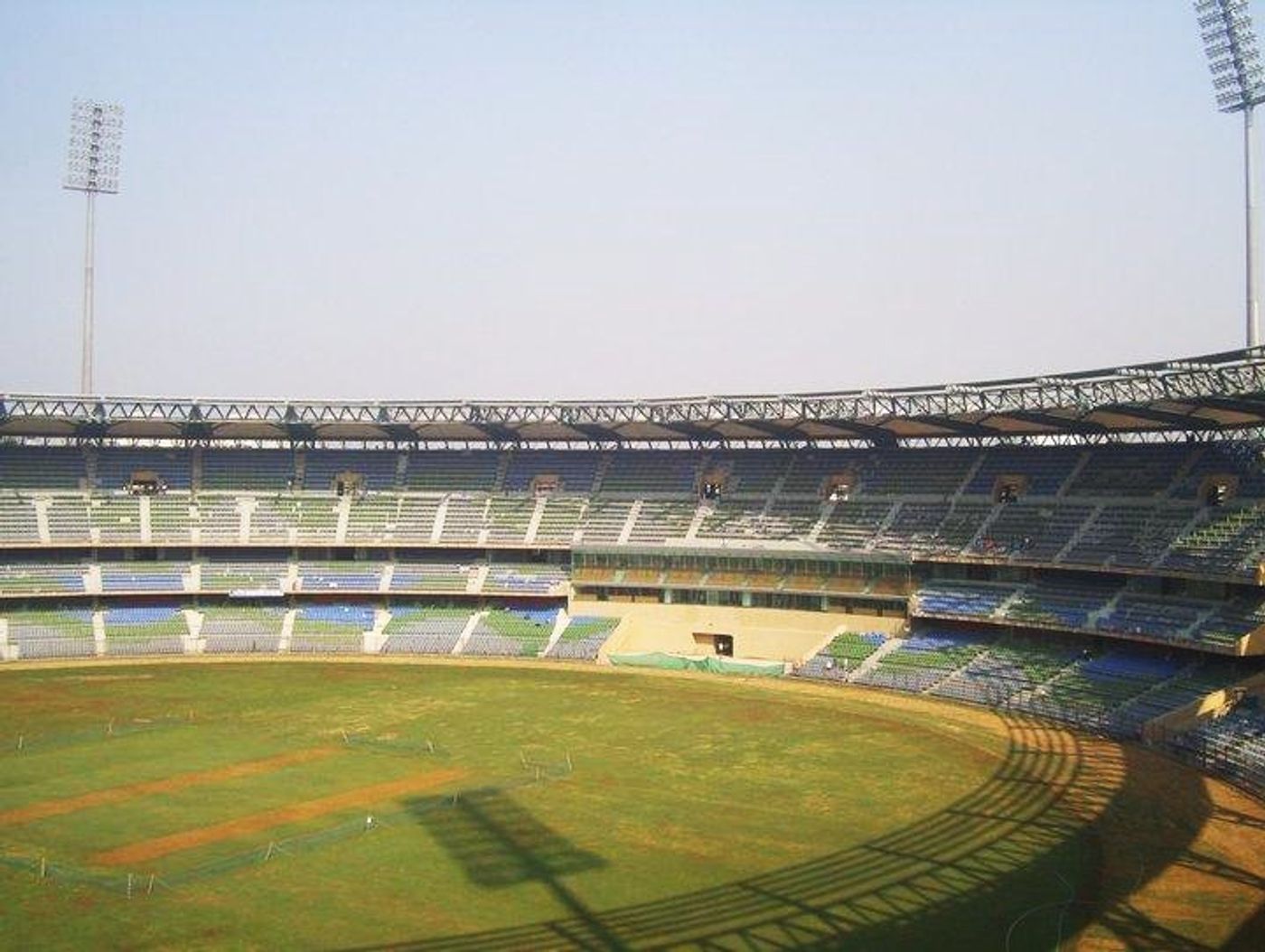
It is a recall with a long runway behind it. Sarfaraz last played a Test on 1 November 2024, against New Zealand at the Wankhede. By the time the first Test begins on 15 August 2026, he will have been out of the side for twenty-one months.
He arrives into a squad already rearranged by injury. Jasprit Bumrah is missing with a knee problem picked up during the England ODI series, and Washington Sundar, Harshit Rana and Nitish Kumar Reddy are all absent. Ravindra Jadeja returns for the first time since January 2026, and there are maiden call-ups for seamer Auqib Nabi, who took 60 Ranji Trophy wickets, and for 33-year-old Madhya Pradesh all-rounder Saransh Jain.
| Test | Dates | Venue |
|---|---|---|
| First Test | 15–19 August 2026 | Galle |
| Second Test | 23–27 August 2026 | Sinhalese Sports Club, Colombo |
Both fixtures are listed on our match schedule, and the full fifteen is on the teams and squads page.
What does his Test record actually look like?
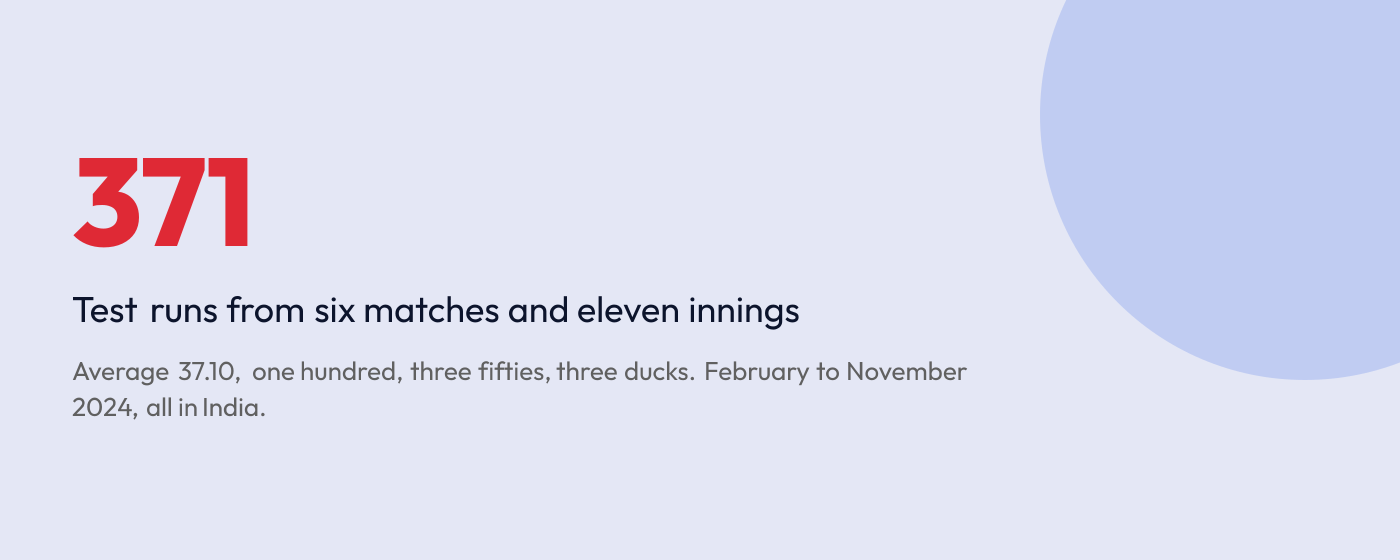
Six Tests. Eleven innings. 371 runs at 37.10, with one hundred, three fifties and three ducks, at a strike rate of 74.94. All of it compressed into nine months of 2024 — and every ball of it played in India.
That is a small sample wearing the costume of a verdict. Eleven innings is roughly a season and a half of Test cricket for a middle-order batter, and the shape of those eleven innings matters far more than the number they average out to.
| Test | Ground | Opponent | Scores |
|---|---|---|---|
| Feb 2024 | Rajkot | England | 62, 68* |
| Feb 2024 | Ranchi | England | 14, 0 |
| Mar 2024 | Dharamsala | England | 56 |
| Oct 2024 | Bengaluru | New Zealand | 0, 150 |
| Oct 2024 | Pune | New Zealand | 11, 9 |
| Nov 2024 | Wankhede | New Zealand | 0, 1 |
Four scores of fifty or more in eleven attempts is a good strike rate of contribution. Three ducks and two more single-figure scores in the same eleven is the other half of the picture, and it is the half that selectors were looking at through 2025.
Does an average of 37 tell the whole story?
Split the record by which innings of the match he batted in and it separates into two clearly different records.
| Innings of the match | Inns | Runs | Average |
|---|---|---|---|
| India's first innings | 6 | 143 | 23.83 |
| India's second innings | 5 | 228 | 57.00 |
The gap is stark, and it is easy to over-read. Five innings is not enough to establish a trait, and the second-innings column is carried almost entirely by one score. But it does line up with how he has been described since he was a teenager in Mumbai age-group cricket: a batter who reads a specific match situation and plays it, rather than one who imposes a fixed method from ball one.
What happened at Bengaluru, and what did it show?
The 150 against New Zealand in October 2024 is the innings the recall is built on, and it was an unusual one. Having failed in the first innings, Sarfaraz scored 96 of those 150 runs behind the wicket, and did not score a single run in the "V" in front of the stumps until after he had reached his hundred.
That is not a coincidence of field settings. It is a method, and he explained it plainly afterwards.
"I like playing the balls that rise high. I have a bouncy wicket back at home [Mumbai], and I play regularly there, and the bounce easily allows me to cut. They were trying to bowl short at me, and I simply played accordingly."
The ramp, the late dab, the cut, the sweep and reverse-sweep off the spinners: Sarfaraz's scoring map is built square and behind, in areas most Indian middle-order batters treat as a supplement rather than a main course. It makes him awkward to set a field to. It also means his run-scoring depends on shots with a thinner margin than a straight drive.
Why did he spend twenty-one months out of the side?
Two reasons, and they are not the same reason.
The first was fitness. Left out of the squad for the 2025 tour of England on fitness grounds, Sarfaraz lost 17 kg in roughly six weeks. His father and coach Naushad Khan described a household diet stripped back to grilled fish, chicken, boiled eggs, salads and green tea, with roti, rice, sugar and anything from a bakery removed entirely.
The second was runs, or the absence of them. By early November 2025 he had made 95 runs across Mumbai's first three Ranji Trophy matches of the season, with recent scores of 42, 32, 1, 15 and 5. He was also left out of the India A side to face South Africa A. His Mumbai team-mate Siddhesh Lad defended him publicly at the time, pointing to four or five years of consistent output before the slump.
What changed over the past nine months?
January 2026 changed the conversation. On 8 January, against Punjab in the Vijay Hazare Trophy at Jaipur, Sarfaraz reached fifty in 15 balls — the fastest List A half-century by an Indian, beating the 16-ball mark shared by Abhijit Kale and Atit Sheth. He finished with 62 from 20 balls, with seven fours and five sixes, though Mumbai lost the chase by a single run.

Two weeks later came the innings that matters more for a Test recall. On 23 January at the Rajiv Gandhi International Stadium, he made 227 from 219 balls against Hyderabad with 19 fours and nine sixes, striking at 103.65. Mumbai had been 82 for 3; his 249-run fourth-wicket stand with stand-in captain Siddhesh Lad, who made 104, took them past 500. It was his fifth first-class double hundred, and it carried him past 5,000 first-class runs.
The first-class career underneath that is the reason his name never quite goes away.
| First-class career | Figure |
|---|---|
| Matches | 60 |
| Runs | 4,863 |
| Average | 63.15 |
| Highest score | 301* |
| Hundreds / fifties | 16 / 16 |
Those figures are as published on 22 December 2025, before the 227; a first-class average above 60 across sixty matches is rare in any era, and it is what makes a Test average of 37 look like an unfinished argument rather than a settled one.
What would Galle ask of him that India never has?
Everything about Sarfaraz's Test record so far is a home record. Rajkot, Ranchi, Dharamsala, Bengaluru, Pune, Wankhede — six grounds, one country. If he plays at Galle, it will be his first Test outside India, on his first senior tour of Sri Lanka.
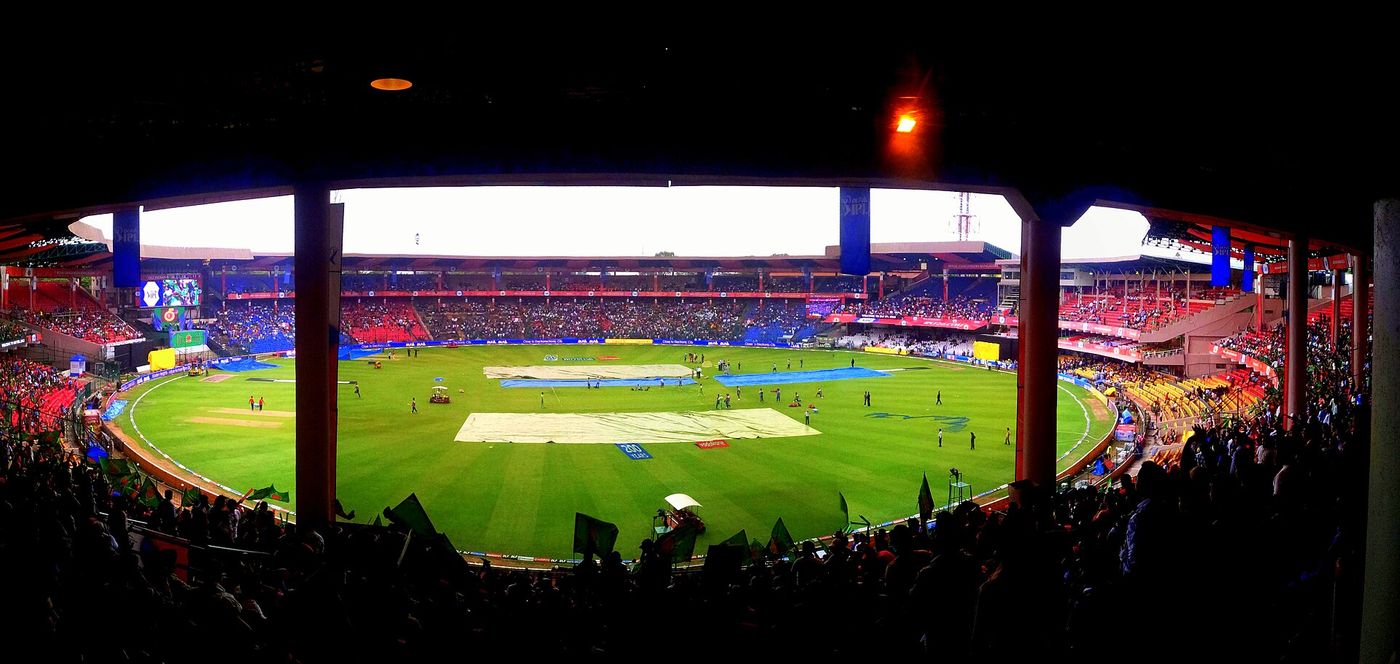
The squad India has picked says something about what they expect. Jadeja, Kuldeep Yadav, Manav Suthar and Saransh Jain give them four spin-bowling options in a fifteen, alongside Siraj, Prasidh Krishna and Gurnoor Brar. A batter whose strongest scoring areas are square and behind the wicket, and who sweeps and reverse-sweeps by preference, is at least well-matched to that kind of contest — but his cut shot has never been tested on a surface with less bounce than the ones that taught it to him.
Is he certain to play the first Test?
No, and the warm-up made that clearer rather than less clear. India beat a Sri Lanka Cricket XI by six wickets on 9 August, chasing 207. Devdutt Padikkal made 142 from 164 balls before retiring, which is a direct answer to the No. 3 vacancy Sudharsan's injury created. Jadeja took 2 for 64 and 2 for 33 and made 63 before retiring hurt, then 22. Shubman Gill made 44 from 54 on his return from a finger injury.
"Devdutt got this opportunity. He expressed himself. He batted beautifully." — Sairaj Bahutule, India spin coach

India's spin coach indicated the final combination would be settled once the squad reached Galle. Sarfaraz arrives as cover for a specialist batter, into a middle order that already contains Gill, Rahul, Pant, Jurel, Padikkal and Jadeja. A recall and a cap are not the same thing.
What is worth watching from here?
- Whether Padikkal's 142 in the warm-up settles the No. 3 slot, and whether that pushes Sarfaraz further down or out of the XI.
- How Sarfaraz's square-of-the-wicket game translates to a surface that behaves nothing like Mumbai.
- Whether the fitness work of the past year shows up in the field, which was the original objection.
- Whether twenty-one months out has changed his tempo — his domestic scoring rates through 2025-26 were far higher than his Test strike rate of 74.94.
Follow both Tests ball by ball on our live scores page, and the wider World Test Championship picture on the series hub.
Frequently asked questions
Sarfaraz Khan has played six Tests, scoring 371 runs in eleven innings at an average of 37.10, with a highest score of 150. He has one hundred, three fifties and three ducks, at a strike rate of 74.94. All six Tests were played in India, three against England in early 2024 and three against New Zealand later that year.
He was named on 9 August 2026 as the replacement for Sai Sudharsan, who was ruled out of the two-Test tour of Sri Lanka with a right toe stress reaction. Sudharsan had been rehabilitating at the BCCI Centre of Excellence in Bengaluru. Sarfaraz joins the squad in Colombo before the team travels to Galle for the first Test.
His most recent Test was against New Zealand at the Wankhede Stadium, beginning on 1 November 2024, where he scored 0 and 1. That was the last of the three Tests in that home series. By the first Test in Galle on 15 August 2026 he will have been out of the Test side for twenty-one months.
As published on 22 December 2025, Sarfaraz Khan had 4,863 first-class runs at an average of 63.15 from 60 matches, with 16 hundreds, 16 fifties and a highest score of 301 not out. He passed 5,000 first-class runs with his 227 against Hyderabad in January 2026, his fifth first-class double century.
That is not settled. He arrives as cover for a specialist batter, and Devdutt Padikkal made 142 in the warm-up match against a Sri Lanka Cricket XI on 9 August 2026, strengthening his own claim to the No. 3 position. India’s spin coach Sairaj Bahutule indicated the final combination would be decided after the squad reached Galle.
The first Test runs from 15 to 19 August 2026 at Galle, and the second from 23 to 27 August 2026 at the Sinhalese Sports Club in Colombo. It is a two-match series forming part of the ICC World Test Championship cycle, with Shubman Gill captaining India and KL Rahul as vice-captain.
Sources
- Sai Sudharsan ruled out of Sri Lanka Test series; Sarfaraz Khan named replacement
- Key takeaways from India's Test squad against Sri Lanka
- Positives for India following warm-up win in Sri Lanka
- Sarfaraz Khan Test batting record, innings by innings (Statsguru)
- Sarfaraz Khan inverts the 'V' in his search for victory
- Ranji Trophy: Sarfaraz Khan smashes double ton for Mumbai against Hyderabad
- Sarfaraz Khan slams 15-ball fifty to become fastest Indian List A half-centurion
- Sarfaraz Khan finds support from Siddhesh Lad amid poor Ranji Trophy form
- Indian cricketer Sarfaraz Khan sheds 17kgs
- Sarfaraz Khan (cricketer) — career statistics
Statistics in this article were checked as at 10 August 2026.