Pakistan were bowled out for 55 by India in Dubai on 5 September 2026, their lowest total in women’s T20 internationals. They were 27 without loss after 4.3 overs, then lost six wickets for eight runs. India’s four spinners took 9 for 31 in 14.1 overs. India won by seven wickets.
Key takeaways
- Pakistan made 55 all out in 18.1 overs against India at the Dubai International Cricket Stadium on 5 September 2026, their lowest total in women’s T20 internationals as at 6 September 2026.
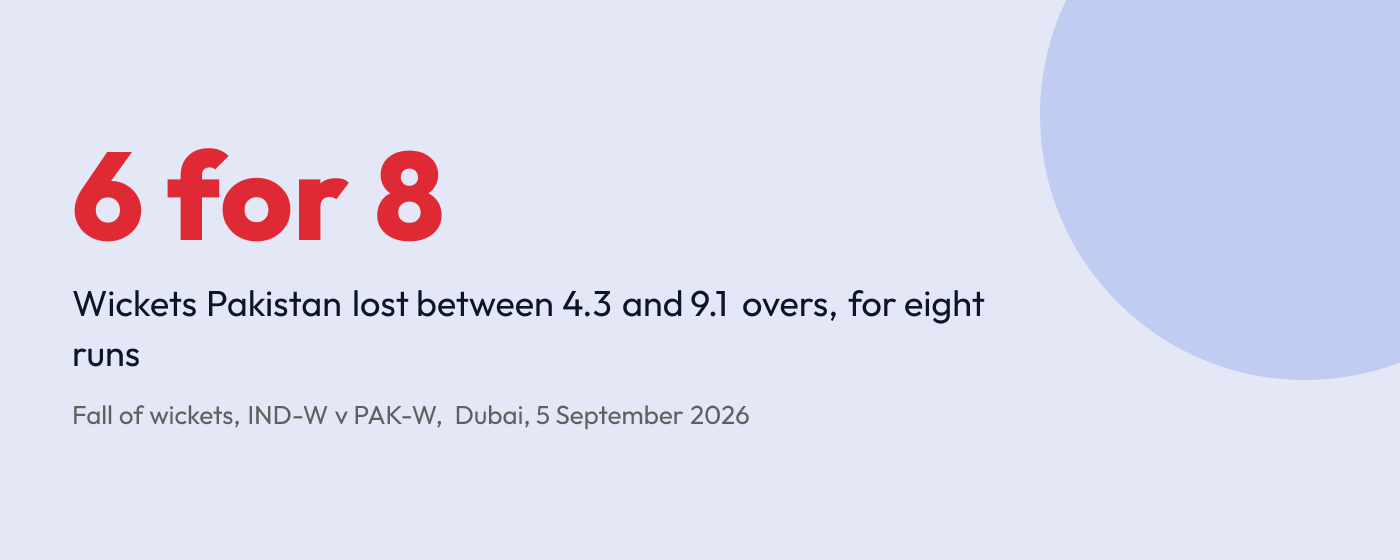
- Pakistan were 27 without loss after 4.3 overs and 35 for 6 by the second ball of the tenth, losing six wickets for eight runs.
- India’s four spinners bowled 14.1 overs for 31 runs and nine wickets; their two seamers went wicketless for 23 in four overs.
- Pakistan’s last four wickets added 20 runs in 54 balls, and the innings contained six fours and no sixes.
- India won by seven wickets with 68 balls to spare and finished Group A with three wins from three.
Pakistan won the toss at the Dubai International Cricket Stadium on 5 September and chose to bat. They were bowled out for 55 in 18.1 overs. India chased it down in 8.4 overs for the loss of three wickets, winning by seven wickets with 68 balls to spare.
That is the result. It is not the explanation. A team bowled out for 55 has usually been blown away inside ten overs, but Pakistan batted for 109 balls, which is more than most sides manage when they are dismissed this cheaply. What happened to them was narrower and stranger than a collapse from the first ball.
| Pakistan | India | |
|---|---|---|
| Total | 55 all out | 57 for 3 |
| Overs | 18.1 | 8.4 |
| Run rate | 3.02 | 6.57 |
| Best bowling | Fatima Sana 3 for 17 | Shree Charani 3 for 7 |
| Result | India won by 7 wickets |
Source: the match scorecard on ESPNcricinfo. Live cards for every game in the tournament are on our live scores page.
Where did Pakistan's innings actually come apart?
For four and a half overs, nothing was wrong. Muneeba Ali and Shawaal Zulfiqar took Pakistan to 27 without loss off 27 balls, which is a run a ball, and Zulfiqar had hit three of the innings' six fours.
Then five wickets fell in 28 balls for eight runs, and a sixth followed immediately.
| Wicket | Score | Over | Batter | How out |
|---|---|---|---|---|
| 1st | 27 | 4.3 | Muneeba Ali | b Shafali Verma |
| 2nd | 28 | 5.2 | Gull Feroza | c Nandani Sharma b Charani |
| 3rd | 29 | 5.6 | Shawaal Zulfiqar | lbw b Charani |
| 4th | 32 | 7.2 | Ayesha Zafar | c Harmanpreet Kaur b Charani |
| 5th | 35 | 8.6 | Sadaf Shamas | b Prema Rawat |
| 6th | 35 | 9.1 | Fatima Sana | lbw b Deepti Sharma |
Pakistan finished the six-over powerplay on 29 for 3. By the second ball of the tenth over they were 35 for 6, and the innings had already been decided. Everything after that was a tail trying to bat out overs it had no way of scoring in.
Why did India's spinners do all the damage?
India bowled two seamers and four spinners. The split is the single most revealing number in the match, and it is not close.
| Overs | Runs | Wickets | Economy | |
|---|---|---|---|---|
| Spin (Charani, Rawat, Deepti, Shafali) | 14.1 | 31 | 9 | 2.19 |
| Pace (Kranti Gaud, Nandani Sharma) | 4.0 | 23 | 0 | 5.75 |
Those totals are derived by adding the individual figures on the scorecard. Shree Charani, the left-arm spinner named player of the match, finished with 4 overs for 7 and took two wickets in her first over. Prema Rawat's leg spin returned 4 overs for 9, and ESPNcricinfo's report notes she bowled 19 dot balls out of 24. Deepti Sharma took 2 for 5 from 3.1 overs. Shafali Verma, who is an opening batter who bowls part-time off spin, took the first wicket.
Nine wickets for 31 runs from four spinners is not a spell of unplayable bowling. It is a set of bowlers who never allowed a scoring option to open up, against a batting side that had no answer other than to wait.
Did the pitch make the total inevitable?
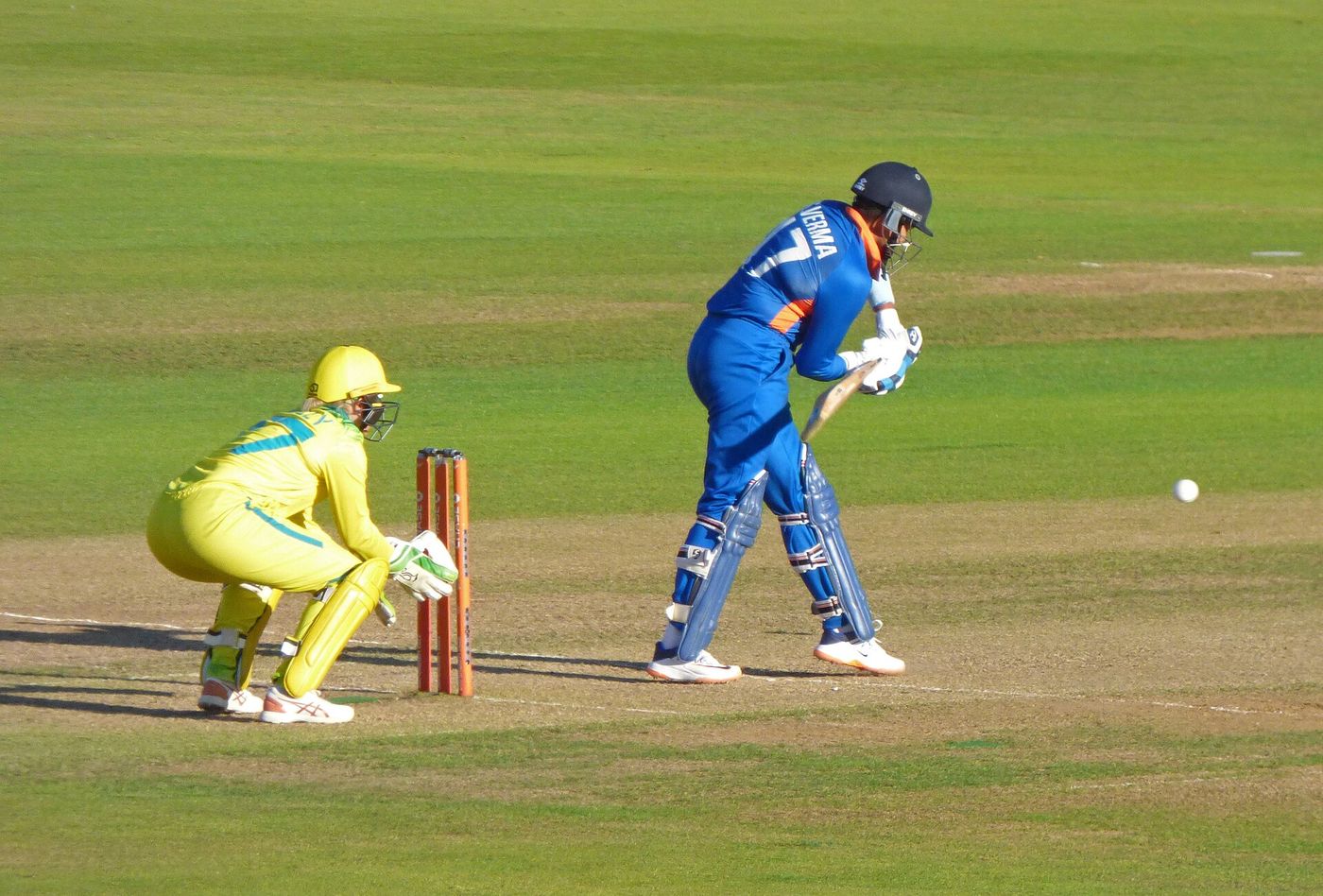
Partly, and it is worth being careful here, because "slow pitch" is the easiest explanation to reach for and the easiest to overstate.
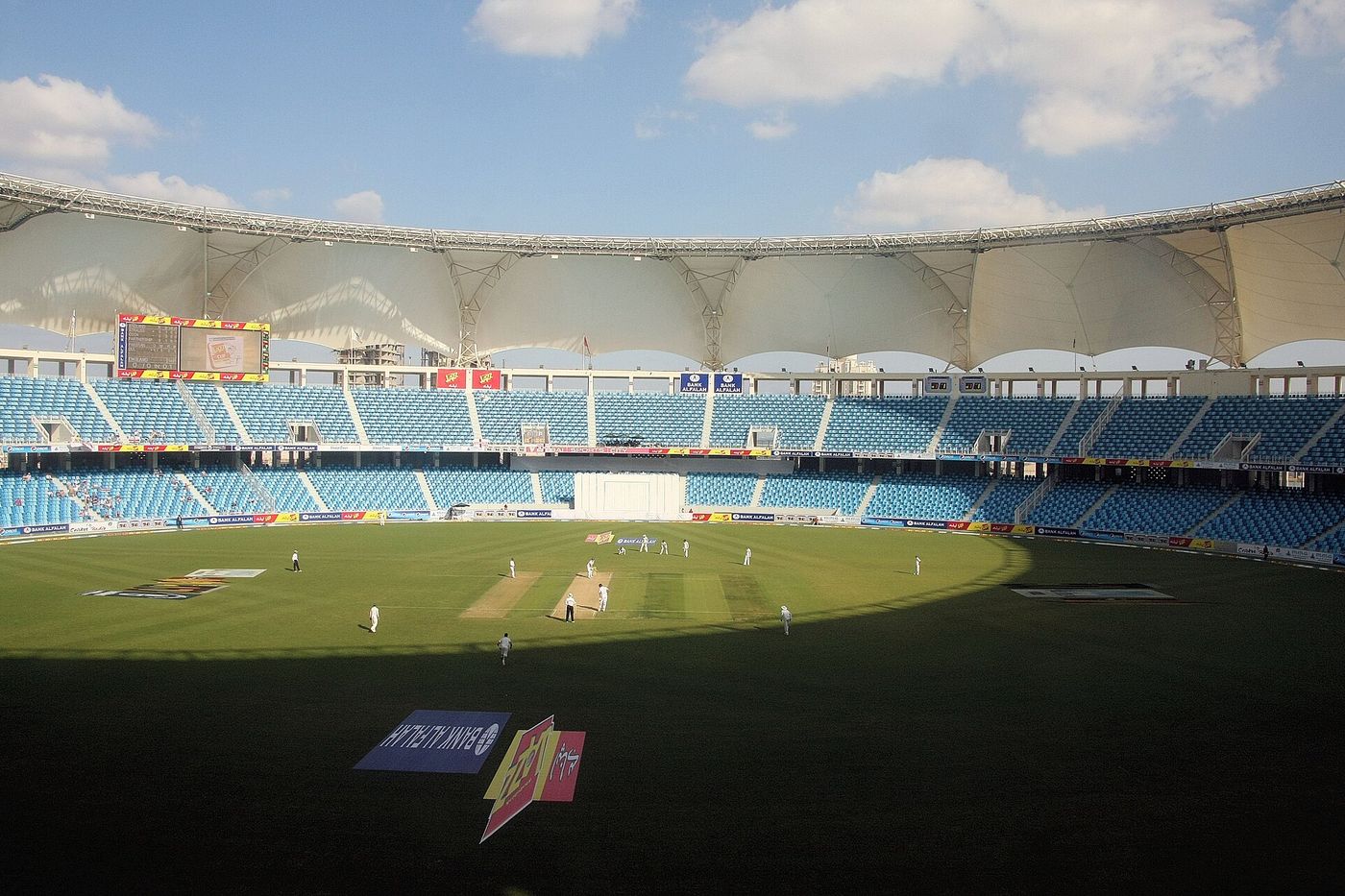
Dubai has been slow all tournament. When Pakistan beat Thailand at the same ground on 1 September, the ICC's own report described a slow pitch on which the scoring rate never took off, and Pakistan's winning total that night was 119.
But India batted on the same square and made 193 for 5 against Hong Kong China on 3 September, with Smriti Mandhana scoring 124 off 64 balls, and 159 for 9 against Thailand on 30 August. The surface was low and slow. It was not a surface on which 55 was a reasonable score.
Why did the last four wickets take nine overs?
This is the part of the innings that a scorecard hides, and it is where the match is most interesting.
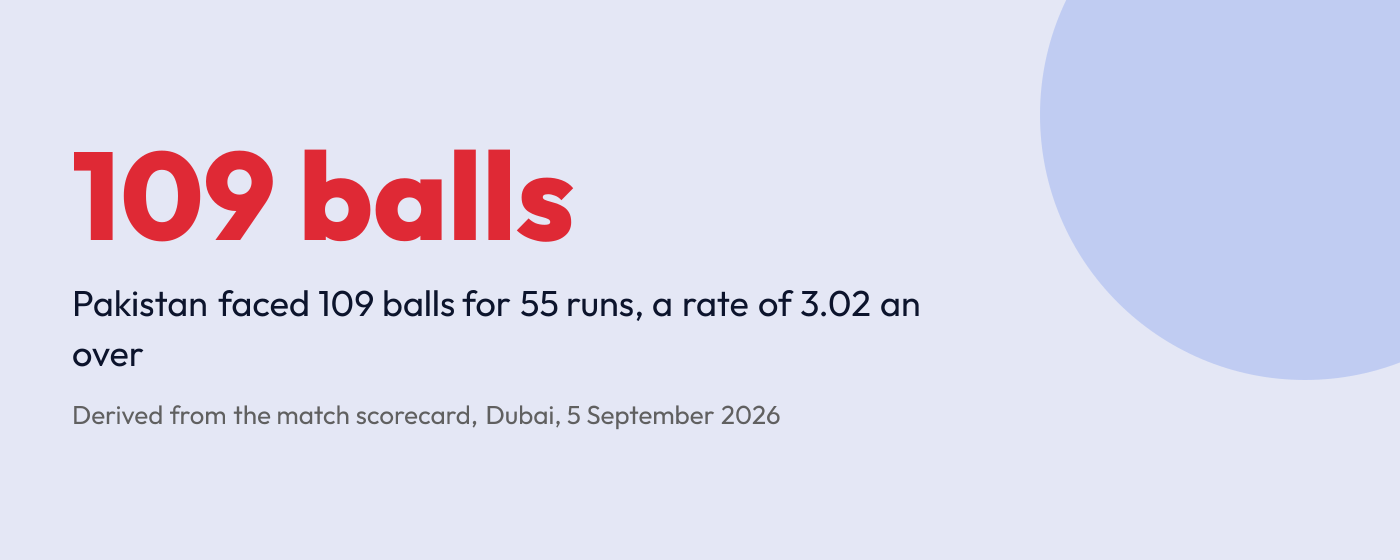
From 35 for 6 in the tenth over, Pakistan's last four wickets added 20 runs in 54 balls, a rate of 2.22 an over. Umm-e-Hani faced 18 balls for 6. Tuba Hassan faced 16 for 9. Nashra Sandhu and Sadia Iqbal faced ten balls between them for nothing.
The whole innings breaks down like this:
- Numbers one to seven: 37 runs off 65 balls
- Numbers eight to eleven: 15 runs off 44 balls
- Extras: 3
- Boundaries: six fours, no sixes, so 24 of the 55 runs came in boundaries
Batting out the overs was a defensible choice for a side six down inside ten. Once the top order had gone there was no realistic total left to chase, and the alternative was being bowled out for 40 and handing India an even larger net run rate swing. What it also means is that Pakistan's 55 is not the story of a side that panicked. It is the story of a side that could not find a boundary for the last nine overs of an innings.
Was India's chase actually comfortable?
By the margin, obviously. By the first four overs, less so.
Fatima Sana, Pakistan's captain, took three wickets for 17 in three overs and had India 29 for 3 inside four overs. She removed Shafali Verma caught and bowled, trapped Smriti Mandhana lbw, and had Pratika Rawal caught behind square. On a chase of any size that spell changes a game.
The target was 56. Harmanpreet Kaur and Deepti Sharma added an unbroken 28 from 28 balls, and India were home in the ninth over. Harmanpreet finished on 18 not out, Deepti on 12 not out.
Fatima Sana bowled the best spell of the match by strike rate and it made no difference to the result. That is what a total of 55 does to a game: it removes every scenario in which good bowling matters.
Cricket Pulse Live analysis
The match was also Harmanpreet Kaur's 150th T20I as captain. ESPNcricinfo's report records that no other cricketer, male or female, has led a national side in 150 matches in the format.
What does the result do to the Women's Asia Cup?
India have now played all three of their Group A matches and won all three, against Thailand on 30 August, Hong Kong China on 3 September and Pakistan on 5 September. With six points from a completed programme, no other side in the group can catch them.
| India in Group A | Opponent | India | Opponent | Margin |
|---|---|---|---|---|
| 30 Aug | Thailand | 159 for 9 | 65 all out | 94 runs |
| 3 Sep | Hong Kong China | 193 for 5 | 56 all out | 137 runs |
| 5 Sep | Pakistan | 57 for 3 | 55 all out | 7 wickets |
The pattern in that table is the thing to carry into the knockout rounds. India have bowled out all three opponents, for 65, 56 and 55, and their spinners have done the bulk of it in every case.
Pakistan have one group fixture remaining, against Hong Kong China, and are still in contention for a semi-final place. Fixtures and start times for the rest of the tournament are on our match schedule, and the full tournament page sits under series and tournaments.
Where does 55 sit in Pakistan's record book?
It is the lowest total Pakistan have made in a women's T20 international, as at 6 September 2026, and ESPNcricinfo's match report records it as such.
The previous mark was 56, made at the same ground: Pakistan were bowled out in 11.4 overs chasing 111 against New Zealand in the 2024 Women's T20 World Cup on 14 October 2024, and lost by 54 runs.
The two innings are not really the same event. In 2024 Pakistan needed to chase a target inside 10.4 overs to improve their net run rate enough to qualify, so the batting was deliberately reckless and the innings lasted 70 balls. In Dubai on Friday they had 20 overs, no equation to beat, and still could not get past 55 in 109 balls. Of the two, the second is the harder one to explain away.

What should Pakistan take from it?
Two things stand out from the numbers rather than from the mood around the result.
The first is that the top order was not out-bowled by pace or by anything exotic. Four spinners, one of them a part-time off spinner, took nine wickets between them, and five of the top six were dismissed bowled, lbw or caught in the ring. That is a batting problem against spin in the middle overs, and it is a fixable one.
The second is that Pakistan have now been kept under 120 in both of their completed innings at this tournament, including the game they won. Their bowling has been competitive throughout, with Fatima Sana taking three wickets in a losing cause and Sadia Iqbal and Nashra Sandhu doing serious work against Thailand. The batting is where the tournament will be decided for them.
Frequently asked questions
Pakistan were bowled out for 55 in 18.1 overs against India at the Dubai International Cricket Stadium on 5 September 2026. India chased the target of 56 in 8.4 overs, finishing on 57 for 3 and winning by seven wickets with 68 balls to spare. Shree Charani took 3 for 7 and was named player of the match.
Yes. As at 6 September 2026, ESPNcricinfo records 55 as Pakistan’s lowest total in women’s T20 internationals. The previous lowest was 56, made at the same Dubai ground against New Zealand at the 2024 Women’s T20 World Cup on 14 October 2024, when Pakistan were bowled out in 11.4 overs chasing a revised target.
Shree Charani took 3 for 7 from four overs and Prema Rawat 3 for 9 from four. Deepti Sharma took 2 for 5 from 3.1 overs and Shafali Verma 1 for 10 from three. One batter was run out. India’s two seamers, Kranti Gaud and Nandani Sharma, bowled four overs between them without taking a wicket.
Pakistan were 27 without loss after 4.3 overs. Muneeba Ali was bowled by Shafali Verma, and Shree Charani then took three wickets in a spell that also accounted for Gull Feroza and Shawaal Zulfiqar. Prema Rawat and Deepti Sharma removed Sadaf Shamas and Fatima Sana. By the second ball of the tenth over Pakistan were 35 for 6.
India completed their Group A programme with three wins from three, beating Thailand on 30 August, Hong Kong China on 3 September and Pakistan on 5 September. With six points from three matches, no other Group A side can pass them. Fixtures and start times for the knockout rounds are listed on the Cricket Pulse Live match schedule.
The match against Pakistan on 5 September 2026 was Harmanpreet Kaur’s 150th T20 international as India captain. ESPNcricinfo’s match report records that no other cricketer, male or female, has captained a national side in 150 matches in the format.
Sources
- IND-W vs PAK-W, 9th Match, Group A, Women’s Asia Cup 2026, full scorecard
- Shree Charani, Prema Rawat spin Pakistan out for 55 in one-sided contest
- HK-W vs IND-W, 7th Match, Group A, Women’s Asia Cup 2026, full scorecard
- IND-W vs THA-W, 3rd Match, Group A, Women’s Asia Cup 2026, full scorecard
- NZ-W vs PAK-W, 19th Match, Group A, ICC Women’s T20 World Cup 2024, full scorecard
- Pakistan off to a winning start in Asia Cup
Statistics in this article were checked as at 6 September 2026.