Afghanistan chased 299 against Ireland at Stormont on 15 August 2026, reaching 302 for 4 in 48.5 overs to win by six wickets. It is their highest successful ODI chase. Rahmat Shah made 143 not out, and 79 of the runs came from the last 50 balls.
Key takeaways
- Afghanistan’s 302 for 4 at Stormont on 15 August 2026 is their highest successful ODI run chase, passing the 286 for 2 they made against Pakistan at Chennai in October 2023.
- The 201-run third-wicket stand between Rahmat Shah and Sediqullah Atal came at 5.74 an over, below the 5.98 the chase required from the first ball.
- Afghanistan scored 79 of their 302 from the last 50 balls, a rate of 9.48 an over, having needed 76 from 57 when the partnership ended.
- Rahmat Shah’s 143 not out from 133 balls is his highest ODI score and his first ODI hundred since January 2021; his first 100 runs took 109 balls and the last 43 took 24.
- Liam McCarthy took 3 for 47 from ten overs for Ireland; Gavin Hoey and Curtis Campher bowled 17 overs between them for 119 runs without a wicket.
Ireland made 298 for 7 at the Civil Service Cricket Club, Stormont, on 15 August 2026. Afghanistan replied with 302 for 4 in 48.5 overs, won by six wickets with seven balls to spare, and took the five-match series 4-0.
The scorecard reads like a comfortable chase. For about 40 of the 50 overs, it was not one.
What did Afghanistan need, and when did they need it?
A target of 299 from 300 balls asks for 5.98 an over. Afghanistan lost Ibrahim Zadran and Rahmanullah Gurbaz inside six overs, both caught off Liam McCarthy, and were 22 for 2 with 267 balls left. The required rate had already moved to 6.22.
Here is the chase in four staging posts, taken from the fall of wickets and the closing score on the ESPNcricinfo scorecard.
| Point in the chase | Score | Balls left | Runs needed | Required rate |
|---|---|---|---|---|
| First ball | 0 for 0 | 300 | 299 | 5.98 |
| After 5.3 overs | 22 for 2 | 267 | 277 | 6.22 |
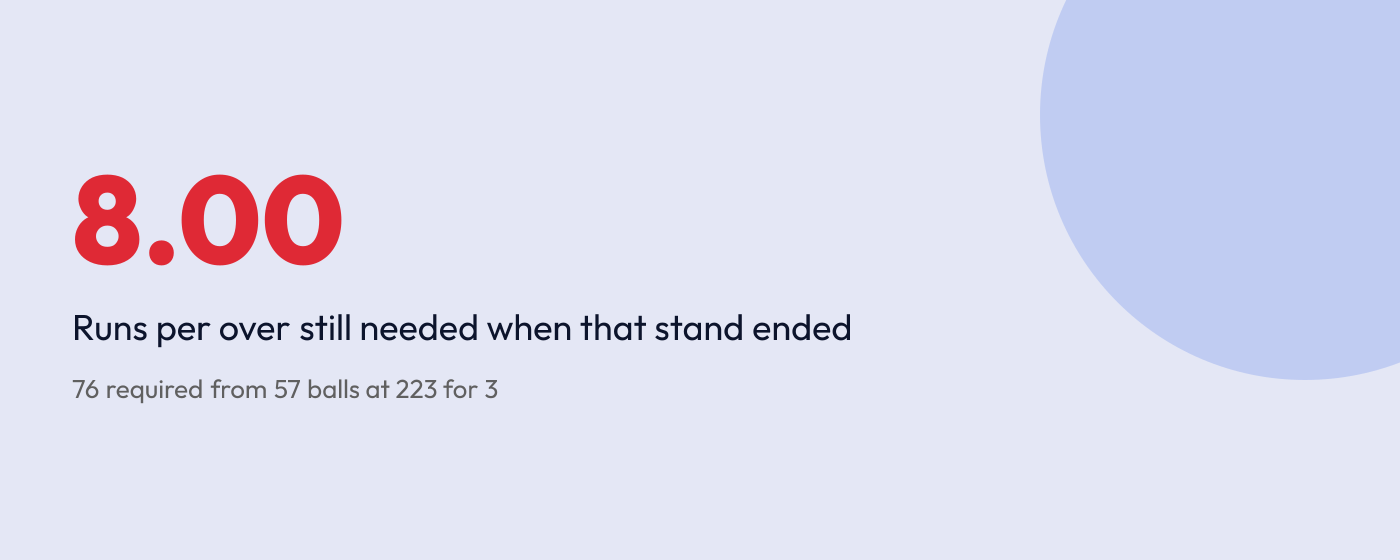
| After 40.3 overs | 223 for 3 | 57 | 76 | 8.00 |
| After 46.4 overs | 279 for 4 | 20 | 20 | 6.00 |
Read down the last column. Afghanistan's task got harder, not easier, across the biggest partnership of the match. That is the passage of play worth explaining.
Where did Ireland's 298 actually come from?
Ireland's innings had one long flat stretch and one steep finish. Split at each wicket, using the fall-of-wickets over numbers, it looks like this.
| Phase of the Ireland innings | Runs | Balls | Run rate |
|---|---|---|---|
| Start to 39 for 2 | 39 | 42 | 5.57 |
| 39 for 2 to 99 for 4 | 60 | 70 | 5.14 |
| 99 for 4 to 154 for 5 | 55 | 89 | 3.71 |
| 154 for 5 to 226 for 6 | 72 | 57 | 7.58 |
| 226 for 6 to 298 for 7 | 72 | 42 | 10.29 |
The 89-ball stretch at 3.71 an over is the phase Afghanistan won and then handed straight back. Harry Tector was in for most of it and made 53 from 80 balls. Allah Mohammad Ghazanfar bowled eight overs for 34 and two wickets, an economy of 4.25, and Ziaur Rahman went for 53 from his ten without a wicket. Between them, 18 overs cost 87.
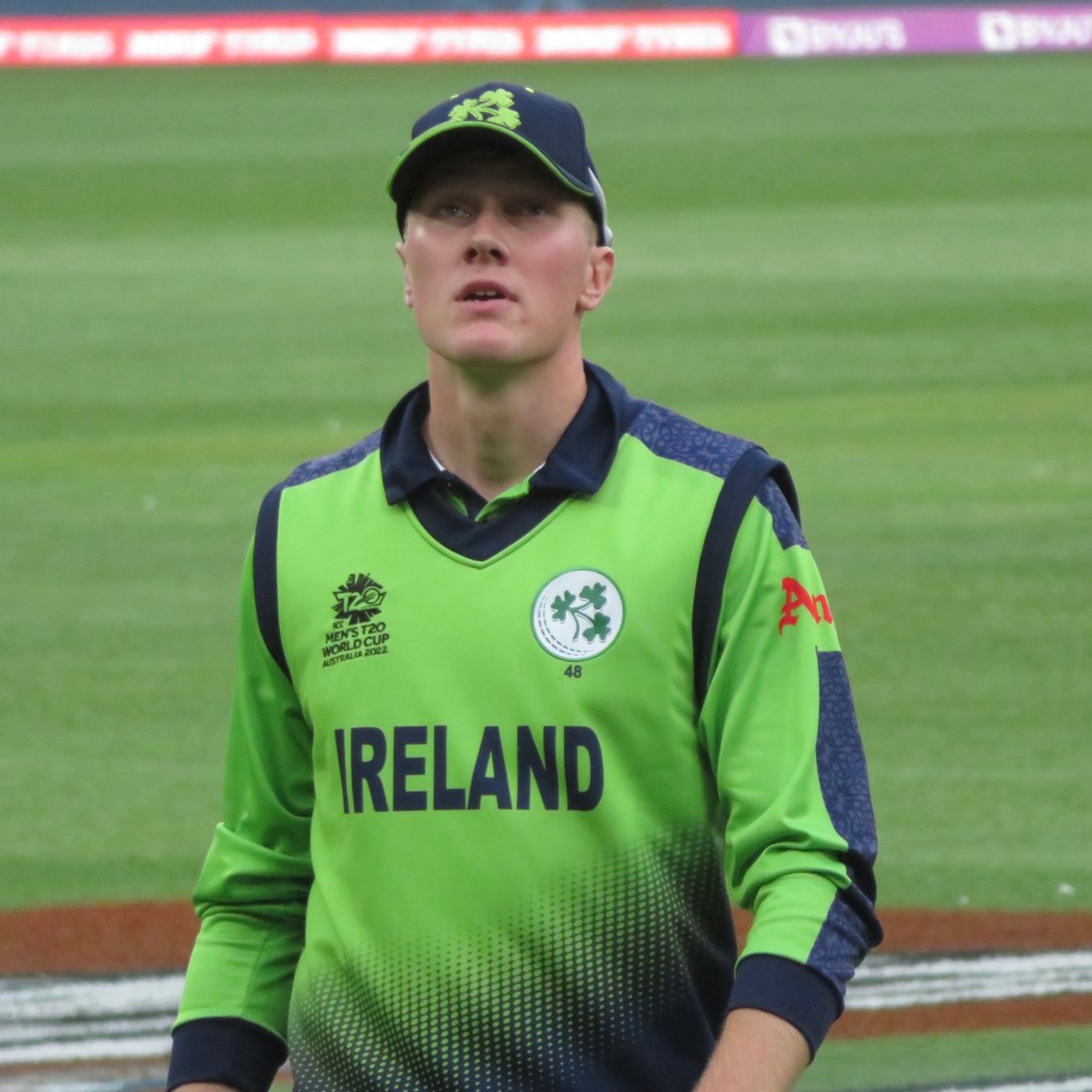
Ireland's answer was Curtis Campher, who made 96 from 84 balls with seven fours and four sixes and was caught at 290 in the 50th over. Ireland scored 144 from their last 99 balls. Afghanistan's two most economical bowlers had by then bowled out.
Why did a record third-wicket stand still leave eight an over to get?
Rahmat Shah and Sediqullah Atal added 201 for the third wicket. ESPNcricinfo records it as Afghanistan's highest stand for that wicket against Ireland, past the 184 the same fixture produced in Abu Dhabi in 2021.
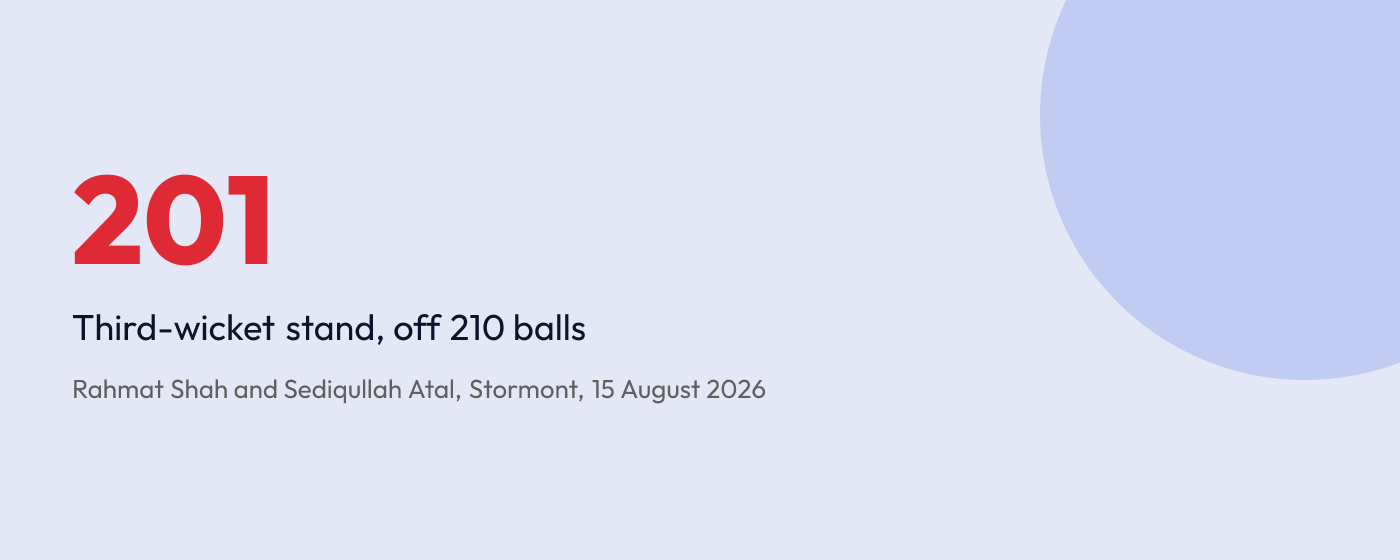
The stand took 210 balls, a rate of 5.74 an over. That is below the 5.98 the chase asked for on the first ball, and well below the 6.22 it asked for once the openers had gone. A 201-run partnership that lasted 35 overs did not close the gap; it held the gap steady while removing the risk of losing.
Atal made 98 from 112 balls, a strike rate of 87.5, and was caught at deep midwicket off McCarthy two short of a hundred. Rahmat reached his own hundred from 109 balls. At the moment the stand broke — 223 for 3, 41st over — Afghanistan needed 76 from 57 balls.
So what actually won the chase?
The last 50 balls. Afghanistan scored 79 of their 302 from the fall of the third wicket onwards, a rate of 9.48 an over, and lost one wicket doing it.
Rahmat Shah's own innings splits neatly at his hundred. The first 100 runs took 109 balls. The last 43 took 24, a strike rate of just under 180. He finished 143 not out from 133 balls with 13 fours and two sixes — his highest score in ODI cricket.
The partnership did not win the chase. It made the closing overs survivable, and Rahmat Shah then played those overs at roughly twice the tempo of the 35 that came before them.
Azmatullah Omarzai supplied the other acceleration, 24 from 14 balls, before Hashmatullah Shahidi saw it home with 9 not out from 6. Live scores for matches in progress are on the live score page; this one finished with seven balls unused.
Which bowling plan ran out first?
Ireland used six bowlers and one of them was a long way better than the rest.
| Bowler | O | M | R | W | Econ |
|---|---|---|---|---|---|
| Liam McCarthy | 10 | 1 | 47 | 3 | 4.70 |
| Jack Moondra | 9.5 | 0 | 66 | 1 | 6.71 |
| Josh Neill | 6 | 1 | 30 | 0 | 5.00 |
| Curtis Campher | 7 | 0 | 46 | 0 | 6.57 |
| Gavin Hoey | 10 | 0 | 73 | 0 | 7.30 |
| Harry Tector | 6 | 0 | 35 | 0 | 5.83 |
McCarthy took all three of the top-order wickets to fall — Ibrahim in the fourth over, Gurbaz in the sixth, Atal in the 41st — and conceded 4.70 an over across his full allocation. Hoey and Campher bowled 17 overs between them for 119 runs and no wicket, exactly 7.00 an over. That is the shape of the defeat in two lines: the bowler who could hold an end had ten overs, and the chase lasted 48.5.
Did the 27 extras matter?
Ireland's 298 included 27 extras, of which 21 were wides. That is 9.1 per cent of the total, and it is runs Afghanistan gave to a target they then had to chase. Ireland's own bowlers conceded nine extras, four of them wides.
- Afghanistan conceded 21 wides; Ireland conceded four.
- Ireland's bat-made runs came to 271 of the 298.
- Afghanistan won anyway, with seven balls in hand.
A side that gifts 21 wides and still chases down a record total has usually been carried by its batting, and that is what the numbers say here.
Where does 302 for 4 sit in Afghanistan's ODI history?
It is their highest successful chase. The table below is Afghanistan's five biggest second-innings totals in a won ODI, from ESPNcricinfo Statsguru, as at 16 August 2026.
| Score | Overs | Opponent | Venue | Date |
|---|---|---|---|---|
| 302 for 4 | 48.5 | Ireland | Belfast | 15 Aug 2026 |
| 286 for 2 | 49.0 | Pakistan | Chennai | 23 Oct 2023 |
| 276 for 8 | 49.4 | U.A.E. | Dubai | 2 Dec 2014 |
| 269 for 3 | 44.5 | Scotland | Edinburgh | 10 May 2019 |
| 269 for 4 | 46.5 | Sri Lanka | Hambantota | 2 Jun 2023 |
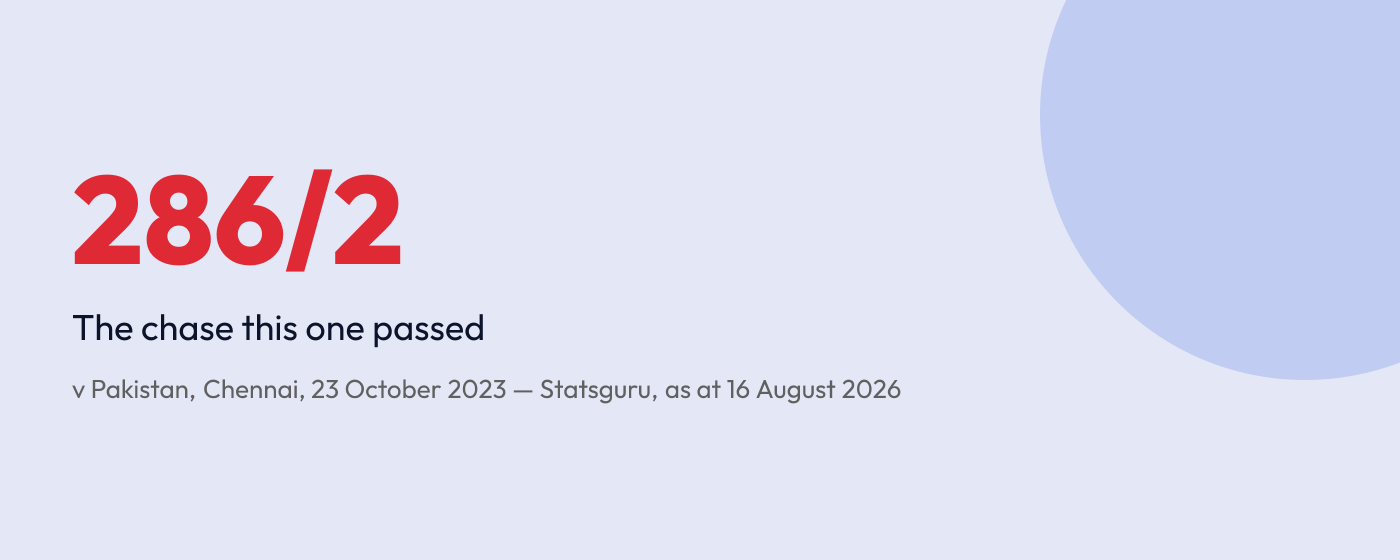
One caveat on the record, and it is an interesting one. Afghanistan have made more batting second: 339 for 6 against Sri Lanka at Pallekele on 9 February 2024. They lost that match. Stormont is the highest they have made batting second and won.
What did the series say about the two sides?
This was Rahmat Shah's first assignment as captain. The ICC reported his appointment in both ODIs and Tests, replacing Hashmatullah Shahidi, with Rahmanullah Gurbaz as deputy. The first match of the five was abandoned; Afghanistan then won by 92 runs, by three wickets, by 42 runs and by six wickets. Rashid Khan was named player of the series. Full fixtures and results for series in progress sit on the series page.
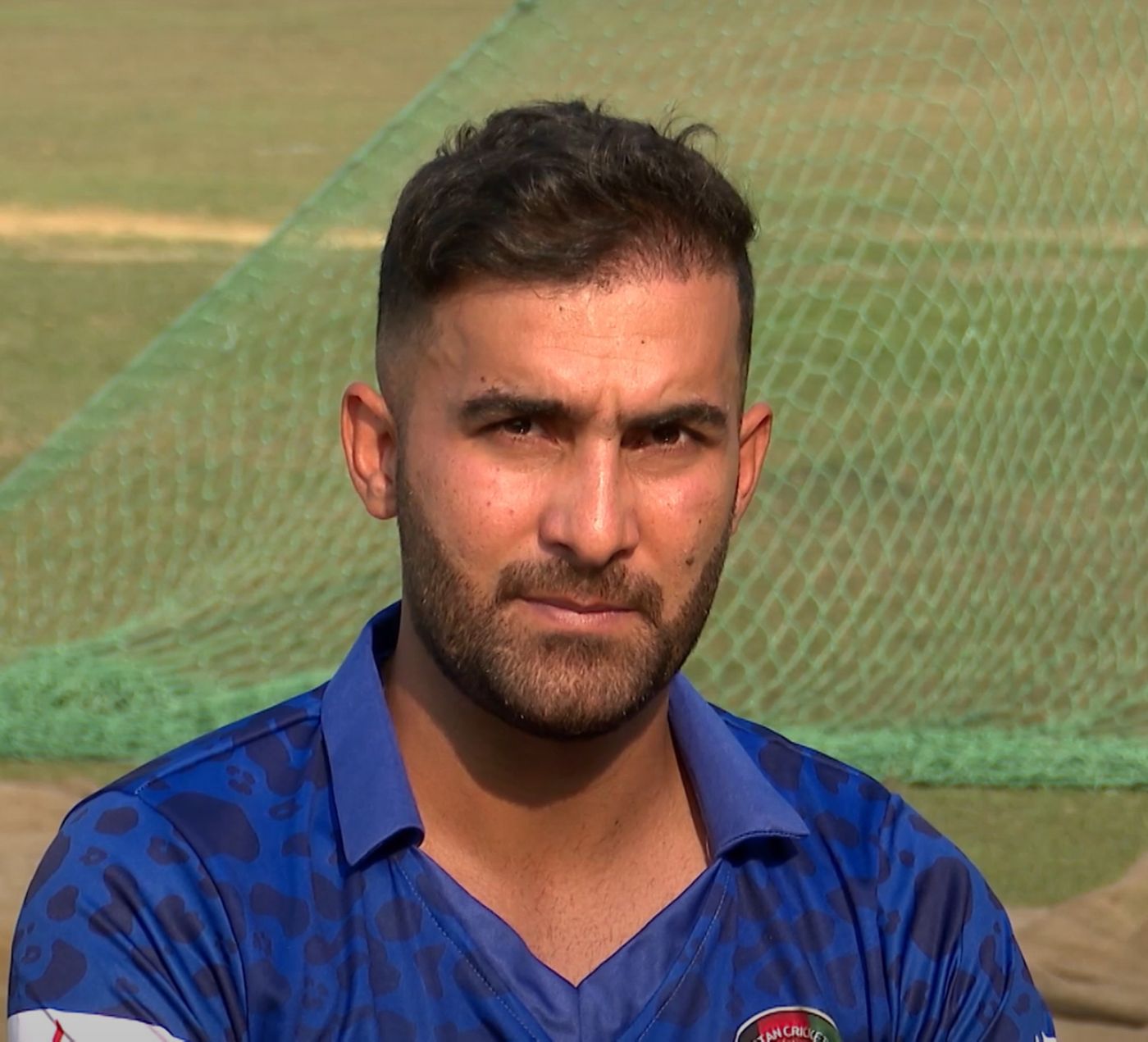
The hundred is worth one more line. Statsguru has Rahmat with six in ODIs, and 143 not out is both his highest and his first since 24 January 2021 — that one also against Ireland, in Abu Dhabi. Three of the six have come against this opponent.
Ireland will read the scoreline more harshly than the cricket deserves.
- They made 301 in the fourth ODI and 298 in the fifth, and lost both.
- Andy Balbirnie made a hundred in the fourth match; Campher scored 84 and 96 in the last two.
- In the final match only two of their six bowlers went at under 5.5 an over, and one of those bowled six overs.
What Ireland did not have across the last two games was a second bowler who could hold an end for a full allocation. That is a squad problem rather than a plan problem, and it is the one the scoreline is really describing.
For Afghanistan, the context beyond the series is the 2027 World Cup, which the ICC confirmed on 15 July 2026 will expand to 14 teams across a three-stage format. Where the two sides sit in the ICC's tables is on the rankings page, and those move after every series — which is the point of playing five of them in August.
Frequently asked questions
Afghanistan won by six wickets with seven balls remaining. Ireland batted first and made 298 for 7 from their 50 overs at the Civil Service Cricket Club, Stormont, on 15 August 2026. Afghanistan replied with 302 for 4 in 48.5 overs. The win completed a 4-0 series victory in the five-match series.
Yes. Per ESPNcricinfo Statsguru, as at 16 August 2026, Afghanistan’s 302 for 4 against Ireland at Belfast is their largest second-innings total in a won ODI, ahead of the 286 for 2 they made chasing against Pakistan at Chennai on 23 October 2023. They have made more batting second only in defeat, 339 for 6 against Sri Lanka in 2024.
Rahmat Shah finished 143 not out from 133 balls with 13 fours and two sixes, and was named player of the match. It is his highest score in ODI cricket and his sixth ODI hundred. It was also his first ODI century since 24 January 2021, an innings that also came against Ireland, at Abu Dhabi.
Because it scored at 5.74 an over across 210 balls, slower than the 5.98 the target of 299 required from the first ball. The stand protected wickets rather than closing the gap, so when Sediqullah Atal fell for 98 at 223 for 3, Afghanistan still needed 76 runs from 57 balls, a required rate of 8.00.
Liam McCarthy was the most effective, taking 3 for 47 from his ten overs at 4.70 an over, including both Afghanistan openers and Sediqullah Atal. For Afghanistan, Allah Mohammad Ghazanfar conceded only 34 runs from eight overs at 4.25 with two wickets, while Azmatullah Omarzai took three wickets but went at 7.40.
Afghanistan won the five-match ODI series 4-0. The first match was abandoned, after which Afghanistan won by 92 runs, by three wickets, by 42 runs and by six wickets. It was Rahmat Shah’s first assignment after being appointed Afghanistan’s ODI and Test captain in place of Hashmatullah Shahidi.
Sources
- Ireland v Afghanistan, 5th ODI, Stormont — full scorecard
- Ireland v Afghanistan, 5th ODI — match report
- Statsguru: Afghanistan ODI team totals batting second, in won matches
- Statsguru: Afghanistan ODI team totals batting second, all results
- Statsguru: individual scores of 100 or more for Afghanistan in ODIs
- Expectations rising as Afghanistan clinch Ireland ODI series
- New Afghanistan captain takes charge for maiden assignment
- New ICC Men’s Cricket World Cup format explained
Statistics in this article were checked as at 16 August 2026.